VerdaAgro – Agriculture Companies Organic Farms WordPress Theme
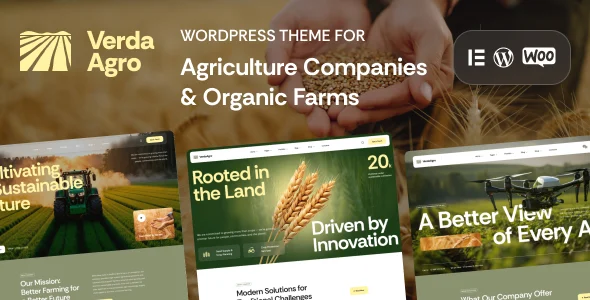
VerdaAgro is an Elementor-powered agriculture WordPress theme built on the WGL Framework for developers creating organic farm and agribusiness websites.
- Daily automated updates
- VirusTotal 0/70 clean
- Licensed under GPL
- Secure 256-bit checkout
- Instant direct cloud link
What Is VerdaAgro – Agriculture Companies Organic Farms WordPress Theme?
VerdaAgro – Agriculture Companies Organic Farms WordPress Theme is a PHP/Elementor theme engineered for agencies and freelance developers building commercial websites for farms, agribusinesses, organic food producers, and ecology-focused corporate clients. It resolves the common bottleneck of hand-assembling agriculture marketing sites by shipping a pre-integrated WGL Framework layer, a drag-and-drop header builder, and more than 50 Elementor modules with per-module settings. In production workflows, it operates as the presentation and layout layer on WordPress 6.8.x through 7.0.x, while WooCommerce 9.x handles commerce and Contact Form 7 handles inbound lead capture.
Key Features of the Theme
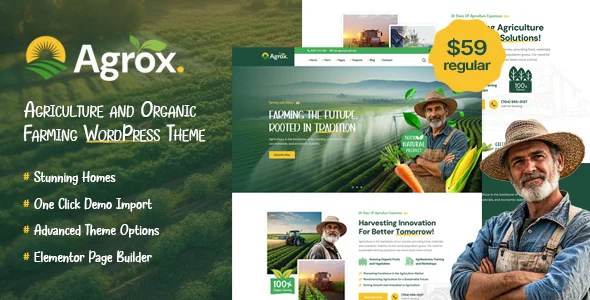
Rendering flows through the WordPress template hierarchy: theme PHP templates compose the DOM, the WGL Framework injects header and footer markup built in its dedicated Elementor builder, and Elementor widgets output section-level content per page. Where a project needs a different agrarian vertical, developers frequently pair this package with Agrox – Agriculture Organic Farming WordPress Theme to compare module sets across dairy, livestock, and crop-focused client builds.
Architectural Highlights
- WGL Framework with Elementor Header Builder: A drag-and-drop header construction layer ships with reusable presets, so header layouts are assembled visually and reused across page templates without editing header.php directly.
- Extended product presentation modules: More than 50 modules carry individual settings for showcasing farm products on any page, decoupling product display logic from WooCommerce archive templates.
- Theme options plus per-page metaboxes: Over 100 global options are stored at the theme level, while local metabox settings override them at single-page scope, giving developers a two-tier configuration hierarchy for client-specific layouts.
- Portfolio grid with infinite scroll and Load More: Portfolio modules paginate listings through infinite scroll or a Load More button, allowing large project catalogs to render progressively instead of in one heavy query.
- One-Click Demo Content Import: A demo import routine provisions homepage layouts, menu structures, and widget assignments, reducing staging-environment setup to a single administrative action.
Supporting infrastructure includes a built-in Mega Menu tool, WGL row animations for scroll-triggered DOM motion, a Team Members module, WooCommerce readiness for shop pages, and translation readiness via WPML and Polylang. A child theme is bundled in the package, so template overrides live outside the parent codebase and survive parent updates. The asset is widget-ready and distributed with PHP, CSS, and JS source files for direct inspection and modification.
Who Should Use This Theme?
The codebase suits WordPress development teams and agencies delivering multiple client sites in the agriculture, organic food, ecology, and corporate farming verticals. Developers comfortable inspecting PHP templates, adjusting Elementor widget settings, and wiring WooCommerce products will extract full value from the 100+ option panel and metabox overrides. For staging-to-production pipelines, the child theme and demo importer support repeatable site scaffolding. Teams running editorial publications alongside farm commerce can also evaluate Fabula – News Magazine WordPress Theme for the content side of a multi-property engagement. Conversely, this theme is not built for Gutenberg-first workflows: block-editor optimization is explicitly absent, so teams standardizing on native block themes should look elsewhere.
Compatibility & Runtime Requirements
The baseline runtime constrains deployments to specific WordPress core versions and a defined set of compatible plugins and browsers.
| Engineering Metric | Deployment Specification |
|---|---|
| Base Technology / Framework | WGL Framework over WordPress theme architecture with Elementor page builder |
| Runtime Requirements | WordPress 7.0.x, 6.9.x, or 6.8.x; PHP file execution required |
| Browser Support | Firefox, Safari, Opera, Chrome, Edge |
| Core Dependencies | Elementor (required for layout modules); Contact Form 7; WooCommerce 9.x.x |
| Layout & Output | Responsive layout, 4+ column grid support, high-resolution assets, widget areas enabled |
| Included Files | PHP Files, CSS Files, JS Files, plus a bundled child theme |
How to Install & Deploy the Theme
Deployment follows the standard WordPress theme activation path, with demo import and configuration as post-activation steps.
- Environment pre-check: Confirm the server runs WordPress 6.8.x or newer and that Elementor is installed and active, since the layout modules depend on the builder runtime. Verify WooCommerce 9.x and Contact Form 7 if commerce or forms are in scope.
- Package upload: Upload the theme archive through the WordPress administration interface under Appearance, or transfer the extracted PHP, CSS, and JS files into the server’s themes directory via SFTP.
- Direct activation: Activate the theme; administrative menus for theme options, the header builder, and the demo importer become operational immediately. The bundled child theme can be activated instead when template overrides are planned.
- Configuration & testing: Run the One-Click Demo Content Import to provision layouts and menus, adjust global colors, fonts, and the 100+ theme options, set page-level metabox overrides where needed, and validate responsive output and Mega Menu behavior across target browsers.
Frequently Asked Questions
Does the theme work with the Gutenberg block editor?
No. The official attributes list Gutenberg optimization as absent. All layout construction is intended to run through the bundled Elementor modules and the WGL Header Builder rather than native block editing.
Can the theme be translated for multilingual farm or food sites?
Yes. The package is translation-ready and compatible with WPML and Polylang, so developers can expose theme strings and page content to either multilingual plugin for localized agribusiness deployments.
Is a child theme required for customizing templates?
No, it is not required, but a child theme is included in the package. Placing template and function overrides in the child codebase keeps customizations isolated from the parent theme’s files during updates.
How are products displayed on pages outside the shop?
Through the extended product presentation module, which adds Elementor controls for surfacing WooCommerce 9.x products on any page, independent of the default shop and archive templates.
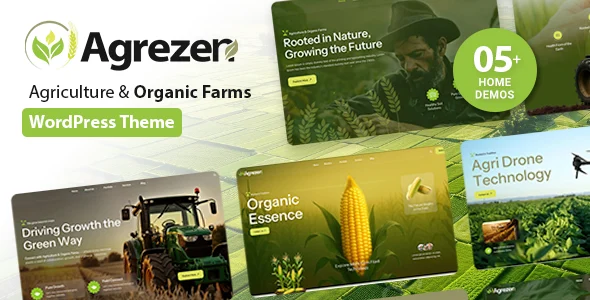
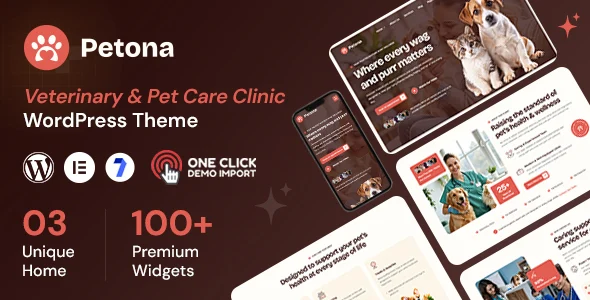
For adjacent verticals in the same Elementor ecosystem, Agrezen – Agriculture Organic Farm WordPress Theme offers a comparable farm-focused codebase, while Petona – Pet Care WordPress Theme demonstrates the same WooCommerce 9.x and demo-import architecture applied to clinic websites.