Dropshipping WooCommerce Extension
Ali2Woo is a dropshipping WooCommerce extension that automates AliExpress product import, pricing rules, and order fulfillment for developers.
- Daily automated updates
- VirusTotal 0/70 clean
- Licensed under GPL
- Secure 256-bit checkout
- Instant direct cloud link
What Is Ali2Woo?
Ali2Woo is a WordPress plugin for WooCommerce, engineered for store developers and agencies to run AliExpress-based dropshipping operations directly from a self-hosted WordPress installation. The package resolves the core bottleneck of manual dropshipping — copying product data, tracking supplier stock, and re-keying orders into supplier platforms — by binding a WooCommerce catalog to AliExpress product endpoints through automated import and synchronization routines. In production workflows it operates as the fulfillment layer of the storefront, handling product ingestion, price markup recalculation, and order dispatch while the theme and payment stack remain untouched.
Key Features of the Plugin
The plugin parses AliExpress product records through its import engine, writes them as native WooCommerce product posts, and attaches cron-driven sync jobs to keep inventory and pricing aligned with the supplier. Administration happens inside the standard WordPress dashboard, where imported items, fulfillment queues, and ePacket-style shipping filters are managed through dedicated menu screens. Merchants building niche catalogs — for example an electronics storefront powered by Nevixra Electronics Store WooCommerce Theme — can layer the plugin under any standards-compliant theme without modifying template hierarchy.
Architectural Highlights
- Product Import Pipeline: Product pages, variants, images, and descriptions are pulled from AliExpress and mapped into WooCommerce product schema, with image sideloading writing media into the local uploads directory so catalog assets are self-hosted.
- Pricing Automation: Markup rules apply per-product or globally — fixed add-ons, percentage multipliers, or tiered ranges — and recalculate sale prices during sync cycles, eliminating manual price maintenance across large catalogs.
- Inventory and Stock Sync: Scheduled background jobs re-query supplier availability and update WooCommerce stock status, flagging out-of-stock or removed listings so the storefront never sells unfulfillable variants.
- Order Fulfillment Module: Placed WooCommerce orders are pushed to AliExpress from the dashboard, with tracking numbers written back onto the order record once the supplier ships, closing the fulfillment loop without leaving the admin.
- Shipping and Product Filtering: Import queries can exclude items by shipping cost, delivery estimates, seller rating, or keyword, letting developers constrain the catalog to commercially viable suppliers before ingestion.
For stores that need promotional logic beyond supplier-based markup, rule engines such as WooCommerce Flexible Pricing complement the plugin’s own pricing layer by adding BOGO and cart-conditioned discounts on top of imported SKUs.
Who Should Use This Plugin?
The codebase targets WooCommerce developers, freelance WordPress engineers, and small agency teams operating client dropshipping stores where fulfillment originates from AliExpress. It fits single-site merchant builds and agency portfolios that need repeatable catalog ingestion without custom PHP. Operators running headless or heavily decoupled commerce stacks should evaluate it carefully, since the fulfillment and sync screens are admin-bound rather than exposed as standalone API services. Non-technical users who expect turnkey hosting, supplier contracts, or guaranteed delivery times will find it is a store-management tool, not a logistics service — supplier performance remains an external operational risk.
Compatibility & Runtime Requirements
Deployment assumes a standard LAMP stack running a current WordPress core with WooCommerce active, since the extension registers its data as WooCommerce product entities rather than a separate schema.
| Engineering Metric | Deployment Specification |
|---|---|
| Base Technology | WordPress plugin (PHP) extending WooCommerce |
| Runtime Requirements | PHP-compatible hosting per WordPress minimums; HTTPS endpoint required for AliExpress API communication |
| Communication Protocols | AliExpress affiliate/API endpoints over HTTPS; scheduled WP-Cron jobs for sync |
| Core Dependencies | WordPress core and an active WooCommerce installation |
| Storage Footprint | Standard WordPress database tables plus sideloaded product media in wp-content/uploads |
How to Install & Deploy the Plugin
- Environment Pre-check: Confirm the host runs a supported PHP version, that WordPress and WooCommerce are current, and that outbound HTTPS calls to supplier endpoints are not blocked by server firewall rules.
- Package Upload: Upload the plugin archive through Plugins → Add New → Upload in the WordPress administration area, or transfer the extracted folder to wp-content/plugins via SFTP.
- Direct Activation: Click Activate. The plugin registers its administrative menus, import modules, and sync schedulers immediately, making the dropshipping engine operational in a single administrative action.
- Configuration & Testing: Open the plugin settings panel, connect the AliExpress access layer, define pricing markup rules and shipping filters, then run a test import and a sandbox order to verify catalog rendering, stock sync, and fulfillment write-back.
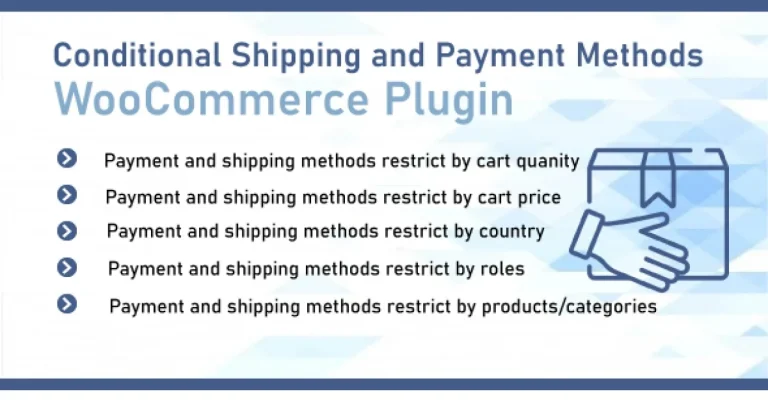
Shops layering checkout restrictions on imported goods — region gating or customer-role limits — commonly pair the deployment with Conditional Shipping and Payments WooCommerce Extension so rule-based gating applies to the same order lifecycle the fulfillment module consumes.
Frequently Asked Questions
Can the plugin import product reviews from AliExpress along with listings?
Yes. The import engine can retrieve supplier product reviews and attach them to the corresponding WooCommerce products, giving new storefronts social proof content without manual copy work during catalog ingestion.
Does order fulfillment happen automatically without admin involvement?
No. Orders are queued in the dashboard and dispatched to AliExpress by an administrator action, after which tracking numbers flow back to the WooCommerce order record once the supplier ships.
Is a free Lite variant available for evaluation?
Yes. A Lite distribution exists with reduced feature scope, allowing developers to validate import and sync behavior on a staging store before committing to the full engine.
Does the plugin require its own database tables?
No. The codebase persists configuration and fulfillment state through WordPress options and post meta belonging to WooCommerce products, so it leaves the existing schema untouched and simplifies rollback.