Modulux – Modular Kitchen WordPress Theme
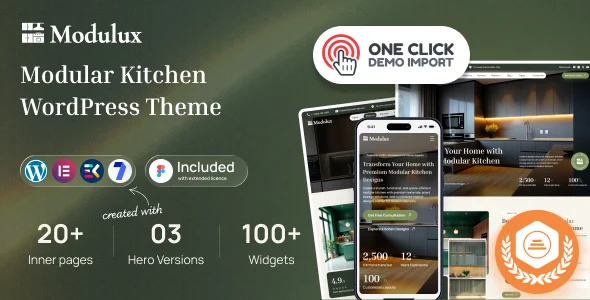
Modulux WordPress Theme is an Elementor-built template for modular kitchen, cabinetry, and interior design businesses, with responsive layouts and demo pages.
- Daily automated updates
- VirusTotal 0/70 clean
- Licensed under GPL
- Secure 256-bit checkout
- Instant direct cloud link
What Is Modulux WordPress Theme?
Modulux WordPress Theme is a PHP-based WordPress theme engineered for agencies and independent developers building lead-generation websites for modular kitchen manufacturers, remodelers, custom cabinet makers, and interior design studios. It resolves the recurring bottleneck of assembling sector-specific page structures — portfolio grids, service listings, testimonial blocks, and team rosters — that generic multipurpose themes leave to manual construction. In a production workflow, it operates as the presentation layer atop WordPress core, delegating layout assembly to Elementor while shipping prebuilt templates that bypass the standard template hierarchy through builder-assigned page rendering.
Key Features of the Theme
Rendering flows from WordPress query resolution into Elementor widget composition: each prebuilt page is a serialized Elementor layout instantiated at runtime, with theme-side PHP templates handling header, footer, and archive chrome around builder output.
Architectural Highlights
- Elementor and Elementor Pro Integration: Layout composition runs through the Elementor DOM builder, meaning containers, flex/grid column structures, and widget settings persist as JSON post metadata. Elementor Pro compatibility extends the widget surface with advanced dynamic tags and theme-builder overrides.
- Prebuilt Page Inventory: The package ships structured pages for portfolio displays, project galleries, services, team members, testimonials, and contact — reducing template authoring to content substitution. Version 1.1 (dated Aug 20, 2026) added a second homepage layout (Home-2) alongside an updated bundled plugin and minor performance fixes.
- Responsive Layout Layer: Breakpoint behavior targets desktop, tablet, and mobile viewports, with the 4+ column grid system adapting column counts per device to protect layout stability and limit cumulative layout shift on image-heavy gallery pages.
- Gutenberg Optimization: The block editor remains usable for post and page content, so editorial teams can write blog or project copy natively while builder pages control high-fidelity landing structures.
- High-Resolution Asset Handling: imagery ships retina-ready, and the included asset set spans PHP, HTML, CSS, and JS files plus layered PSD sources for design-side edits.
For adjacent verticals in the same delivery pipeline — such as a painting and renovation contractor needing a different visual system — Paintix WordPress Theme applies the same Elementor-driven approach with demo import and WPML support.
Who Should Use This Theme?
This codebase fits WordPress developers and small agency teams delivering client sites in the home improvement and interior verticals: kitchen remodeling firms, cabinet manufacturers, furniture designers, and renovation studios that need portfolio-forward presentation without custom template development. It suits staging-to-production agency workflows where the client edits content through Elementor and Gutenberg while the developer controls theme PHP and bundled assets. It is not intended for teams requiring headless decoupled architectures, custom REST-first data models, or server-rendered marketing funnels outside the WordPress runtime — and it presumes the operator can install and configure WordPress plus the Elementor plugin pair before deployment.
Compatibility & Runtime Requirements
Deployment requires a WordPress host meeting the declared core version range and the supporting builder plugins present before page templates render.
| Engineering Metric | Deployment Specification |
|---|---|
| Base Technology | PHP-based WordPress theme (PHP, HTML, CSS, JS files included; layered PSD design sources) |
| Runtime Requirements | WordPress 6.0.x through 7.0.x; standard PHP/MySQL hosting stack |
| Core Dependencies | Elementor (drag-and-drop builder); Elementor Pro optional; Gutenberg block editor supported |
| Third-Party Integrations | Contact Form 7 (lead-capture forms), WPML (multilingual content trees) |
| Layout & Rendering | Responsive layout, 4+ column grid, widget-ready sidebar zones, high-resolution assets |
| Browser Matrix | Chrome, Firefox, Safari, Edge, Opera |
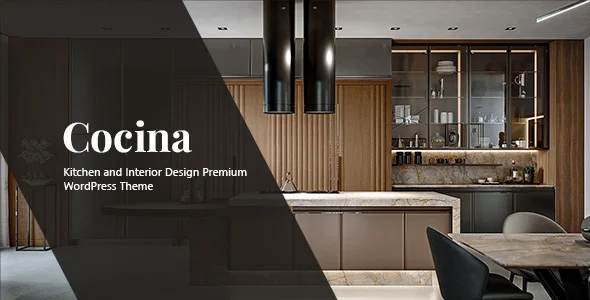
Where a client brief extends into transactional territory — selling cabinetry hardware or booking deposits online — Cocina Kitchen Interior Design WordPress Theme covers that gap with WooCommerce 8.x commerce support on a comparable kitchen-focused layout system.
How to Install & Deploy the Theme
Deployment follows the standard WordPress theme installation path; once activated, all prebuilt templates and administrative options are operational.
- Environment Pre-check: Confirm the server runs a WordPress version within the 6.0.x–7.0.x declared range, and install the Elementor plugin (plus Elementor Pro if the build depends on Pro widgets). Verify PHP error reporting is clean on a staging instance before production release.
- Package Upload: Upload the theme archive through the WordPress administration interface (Appearance → Add New → Upload Theme), or extract the PHP/CSS/JS file tree directly into the
wp-content/themes/directory over SFTP. - Direct Activation: Click Activate. The theme initializes immediately: header and footer templates, widget areas, and Elementor page layouts become available, and the bundled plugin registers its modules without additional gating steps.
- Configuration & Testing: Assign the prebuilt homepage layouts (including the Home-2 variant from v1.1), populate portfolio, services, and testimonial templates with client content, wire Contact Form 7 endpoints for lead routing, and validate rendering across the five supported browsers and three viewport classes.
Frequently Asked Questions
Does the theme package include editable design source files?
Yes. The distributed archive contains layered PSD files alongside the PHP, HTML, CSS, and JS sources, so design teams can modify visual comps and re-export imagery without reverse-engineering compiled stylesheets from the running site.
Can the site be maintained bilingually without duplicating the install?
Yes. WPML compatibility allows a single WordPress instance to serve multiple language trees, letting editors translate project galleries and service pages while the Elementor layouts and theme chrome resolve localized strings per request.
Is a block-editor workflow viable alongside the builder pages?
Yes. The theme is Gutenberg optimized, so editorial content such as blog posts and project notes can be authored with native blocks while Elementor-composed landing and portfolio pages handle the visually structured presentation layer.
What changed in the v1.1 release?
The Aug 20, 2026 v1.1 update refreshed the bundled plugin, introduced a second homepage layout (Home-2), and applied minor bug fixes and performance improvements — all backward-compatible with content built on prior layout structures.