Paintix – Painting Renovation WordPress Theme
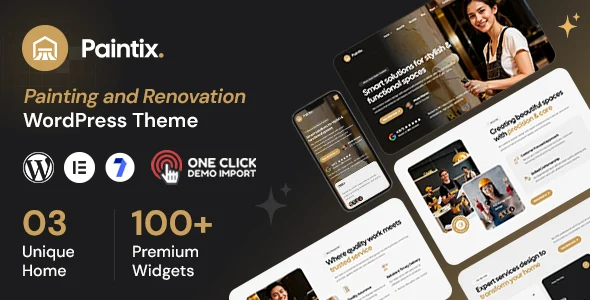
Paintix WordPress Theme is an Elementor-driven renovation and painting company theme with demo import, WPML support, and responsive layouts for contractors.
- Daily automated updates
- VirusTotal 0/70 clean
- Licensed under GPL
- Secure 256-bit checkout
- Instant direct cloud link
What Is Paintix?
Paintix is a WordPress theme engineered for agencies and freelance developers building websites for painting contractors, renovation firms, and home improvement service providers. It resolves the core bottleneck of assembling an industry-specific multi-page site from scratch by shipping pre-structured layouts for services, projects, teams, testimonials, and galleries, all editable through the Elementor drag-and-drop builder. In production workflows, it serves as the presentation layer on a self-hosted WordPress installation, sitting on top of the theme template hierarchy while delegating layout composition to Elementor’s DOM rendering pipeline.
Key Features of the Theme
At runtime, the theme’s PHP templates assemble the page shell, enqueue CSS and JS assets, and hand the content region to Elementor widgets, which generate the nested DOM tree server-side before browser hydration. Global color and typography tokens flow from a centralized panel into Elementor’s design system, keeping every widget instance synchronized without per-section overrides.
Architectural Highlights
- One-Click Demo Import: A standalone importer routine copies demo posts, pages, media, and widget assignments into the database, collapsing initial provisioning into a single administrative action.
- Elementor and Elementor Pro Integration: Layouts are composed entirely from Elementor containers and widgets, so structural edits happen in the builder rather than in template PHP files; Elementor Pro extends header and footer building.
- Gutenberg Optimization: The theme registers support for the block editor, allowing blog content in Blog and Blog Detail templates to be authored with native blocks while landing pages remain Elementor-driven.
- Responsive, High-Resolution Layouts: Grid columns scale across desktop, tablet, and mobile breakpoints, and the stylesheet layer adapts rendering for high-DPI displays to prevent image blur on retina panels.
- WPML Compatibility: The codebase registers its strings through translatable wrappers, enabling multilingual site trees where each language variant shares the same layout configuration.
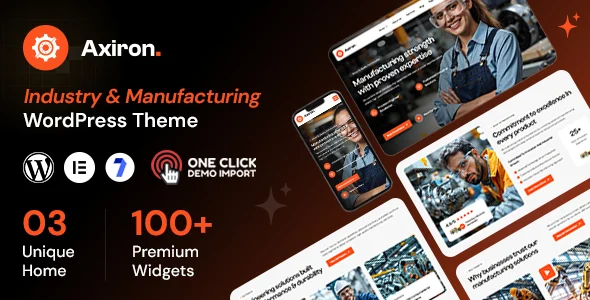
For agencies running parallel client builds in adjacent verticals, the same Elementor-based architecture appears in packages like Axiron, which targets industrial and manufacturing sites with three homepage demos.
Who Should Use This Theme?
This package fits freelance WordPress developers, small agency teams, and technically capable business owners who need to deploy a service-oriented site for painters, remodelers, handymen, or decorators quickly and then hand maintenance back to the client. The seventeen included templates — three homepage variants plus Services, Projects, Team, Testimonials, Pricing Plans, Image and Video Galleries, FAQs, Contact, 404, and Blog structures — cover the full information architecture of a local trade business without custom development. It is not intended for teams requiring headless decoupling or programmatic layout generation, since page composition depends on Elementor’s editor; developers who need fully code-defined output should evaluate the theme’s PHP files for child-theme overrides first. Site builders working across multiple sectors can pair this engine with adjacent packages such as Doma, which applies a comparable builder-driven approach to real estate development presentations.
Compatibility & Runtime Requirements
Deployment assumes a current WordPress environment running an Elementor stack; the following parameters define the verified baseline.
| Engineering Metric | Deployment Specification |
|---|---|
| Base Technology | WordPress Theme (PHP, CSS, JS files included) |
| Runtime Requirements | WordPress 6.6.x through 7.1.x |
| Page Builder Engine | Elementor; Elementor Pro supported |
| Form Handling | Contact Form 7 integration for Contact page workflows |
| Localization Layer | WPML multilingual compatibility |
| Editor Support | Gutenberg optimized; widget-ready sidebar regions |
| Browser Matrix | Firefox, Safari, Opera, Chrome, Edge |
How to Install & Deploy the Theme
Deployment follows the standard WordPress theme lifecycle and requires no configuration files beyond the package itself.
- Environment Pre-check: Confirm the server runs a supported WordPress version (6.6.x to 7.1.x), that Elementor is installed and active, and that PHP memory limits accommodate the demo importer’s media transfer.
- Package Upload: Upload the theme archive through the WordPress administration interface under Appearance, or transfer the extracted PHP, CSS, and JS files directly into the wp-content/themes directory via SFTP.
- Direct Activation: Activate the theme from the Appearance screen. Required plugin notices will appear; after installing the bundled dependencies, all menus, page templates, and widget areas become operational.
- Configuration & Testing: Run the one-click demo importer to replicate the reference layout, then adjust global fonts and colors from the centralized panel, replace placeholder media in Services, Projects, and Gallery pages, and verify responsive output across the browser matrix.
Frequently Asked Questions
Does the theme include a working video gallery template?
Yes. The package ships a dedicated Video Gallery page alongside an Image Gallery template, both built as pre-structured layouts that developers populate with their own hosted media through the builder after demo import.
Can the blog section be edited with the native block editor?
Yes. The codebase is Gutenberg optimized, so Blog and Blog Detail templates render block-authored content correctly, while marketing and service pages remain composed through Elementor widgets instead of block markup.
Is a multilingual site structure supported out of the box?
Yes. WPML compatibility means theme strings and builder content can be mapped into multiple language trees, letting agencies serve regional service pages without maintaining separate installations per locale.