Product Add-ons WooCommerce Extension
Product Add-ons WooCommerce Extension is a WordPress plugin for developers attaching configurable option fields to WooCommerce products and storefronts.
- Daily automated updates
- VirusTotal 0/70 clean
- Licensed under GPL
- Secure 256-bit checkout
- Instant direct cloud link
What Is Product Add-ons WooCommerce Extension?
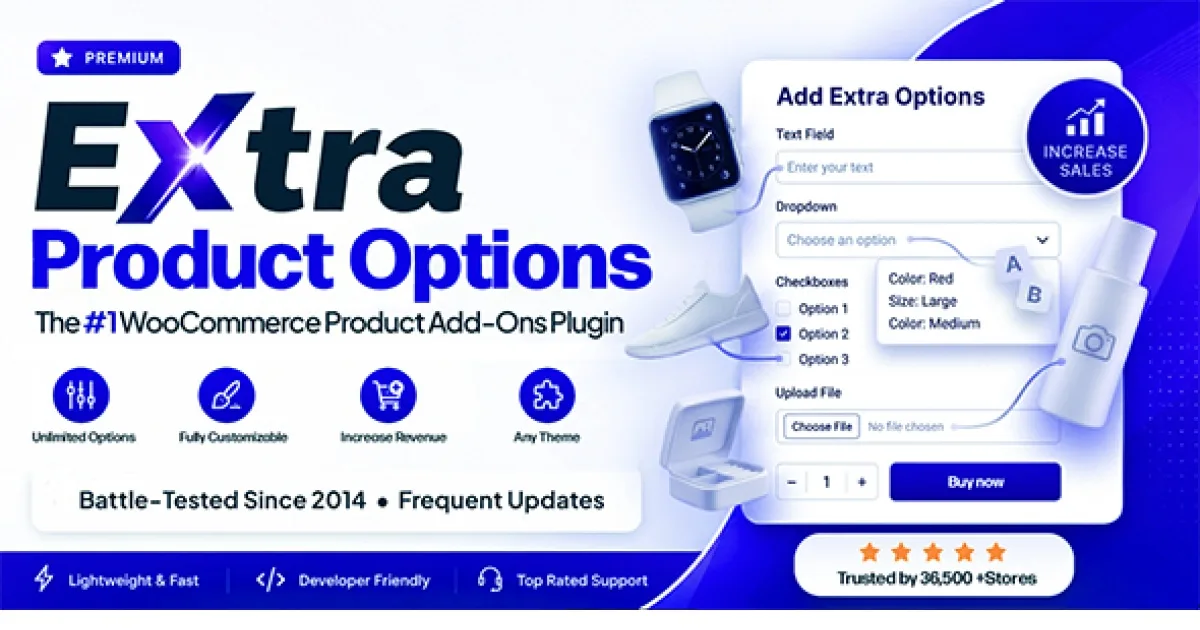
Product Add-ons WooCommerce Extension is a WordPress plugin engineered for developers and agencies to attach configurable option fields to WooCommerce product pages. It resolves the bottleneck of hard-coding selectable variants, add-on inputs, and custom registration fields directly into theme templates by exposing them as managed addon structures. In production, it functions as a modular layer that binds customer-supplied data to cart and checkout records without altering WooCommerce core files.
Key Features of the Plugin
The plugin parses addon definitions attached to a product, renders their corresponding input markup on the frontend product template, and serializes the customer’s selections into the cart item metadata so the values persist through checkout and order storage. This execution path keeps addon state synchronized with the native WooCommerce cart lifecycle rather than relying on session hacks.
Architectural Highlights
- Configurable Product Fields: Attaches selectable option groups to individual products so developers can deploy variants without editing PHP templates.
- Cart Metadata Binding: Persists addon selections into cart item and order meta, ensuring submitted values survive checkout and post-purchase review.
- My Account Registration Flow: Integrates with the customer account area, letting registered users manage registered product addon entries from a dedicated account view.
- Template-Level Rendering: Output respects the standard WooCommerce template hierarchy, allowing overrides through child-theme copies rather than core patches.
- Standalone Module Design: The codebase operates as an independent plugin on top of the WooCommerce runtime, isolated from theme logic for clean staging rollouts.
For storefronts that extend product pages further, pairing this module with the Product Reviews Pro WooCommerce Extension gives developers structured review and photo data alongside addon inputs on the same product template.
Who Should Use This Plugin?
This codebase targets WordPress engineers and agency teams building client storefronts that require selectable product options, custom inputs at registration, or account-level product management. It fits custom WooCommerce builds where addon logic must remain maintainable across theme updates. It is not intended for non-technical store operators seeking purely drag-and-drop page builders, nor for headless projects that bypass the native WooCommerce rendering pipeline, since the addon rendering and metadata writes depend on the standard WordPress and WooCommerce runtime.
Compatibility & Runtime Requirements
The module runs within a standard WordPress environment and depends on an active WooCommerce installation for its commerce layer.
| Engineering Metric | Deployment Specification |
|---|---|
| Base Technology / Framework | WordPress Plugin Architecture |
| Runtime / Language Baseline | Standard PHP runtime of the WordPress Core Environment |
| Parent Ecosystem Dependency | Native WooCommerce Dependency |
| Data Handling | Cart item meta and order meta persistence via WordPress metadata APIs |
| Deployment Scope | Self-hosted WordPress / WooCommerce storefront |
Limitations & Technical Considerations
The plugin’s scope is bounded by the WooCommerce cart and checkout lifecycle: addon fields render on the product template and persist through native metadata writes, so deployments using heavily modified checkout flows should verify metadata propagation before release. The account-facing addon registration view assumes the standard My Account endpoint structure; aggressive endpoint removals or third-party account rewrites will require template-level adjustments. As a single-plugin module, it does not ship its own REST controller surface for external consumption, so headless or microservice clients must read addon data through the standard order meta rather than a dedicated API layer. Staging validation against the production theme hierarchy is advised to confirm override paths resolve correctly.
Frequently Asked Questions
Does the plugin require WooCommerce to be active?
Yes. The addon engine hooks into the WooCommerce product template, cart lifecycle, and order metadata system, so an active WooCommerce installation is a mandatory parent dependency for any deployment.
Can developers override the addon field output in a child theme?
Yes. Rendering follows the standard WooCommerce template hierarchy, so field markup can be adjusted through child-theme template copies without patching the plugin or WooCommerce core files.
Do addon selections survive checkout into the stored order?
Yes. Customer inputs are serialized into cart item metadata and carried into the order records, allowing store administrators to review submitted addon values after payment completes.
Is the module usable outside the standard My Account structure?
Yes, with constraints. The product addon fields operate on any standard product template, but the account registration view assumes default WooCommerce My Account endpoints remain in place.