Agrarium | Agriculture Organic Farm WordPress Theme
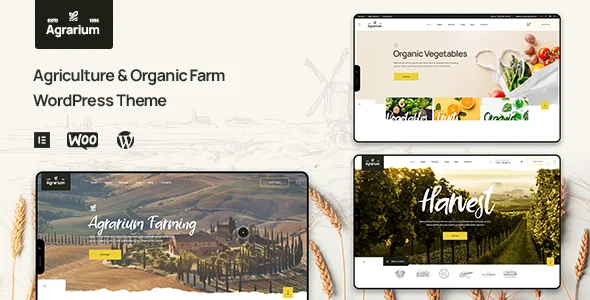
Agrarium Agriculture Organic Farm WordPress Theme: an Elementor-driven PHP codebase with 6 home layouts, WooCommerce shop flows, and WPML support.
- Daily automated updates
- VirusTotal 0/70 clean
- Licensed under GPL
- Secure 256-bit checkout
- Instant direct cloud link
What Is Agrarium Agriculture Organic Farm WordPress Theme?
Agrarium Agriculture Organic Farm WordPress Theme is a PHP and HTML5/CSS3 WordPress theme, engineered for agencies and solo developers building websites for organic farms, dairy and livestock producers, wineries, and organic food retailers. It resolves the recurring bottleneck of assembling sector-specific layouts, shop flows, and multilingual plumbing from scratch by shipping six distinct home page structures and a full demo import pipeline. In production, it operates as a parent codebase with a bundled child theme, allowing per-client modifications without patching core template files.
Key Features of the Theme
The package renders pages through an Elementor-driven DOM tree combined with WordPress template hierarchy overrides, so front-end output is assembled by the live builder while WooCommerce archives, cart, and checkout templates are resolved through the /woocommerce/ directory.
Architectural Highlights
- Elementor widget layer with Swiper carousels: Sliders run inside Elementor widgets against the Swiper carousel library; v1.0.8 removed hardcoded RTL slider settings so carousels now detect and switch to RTL mode automatically, and v1.1.1 corrected carousel width behavior in fullwidth sections.
- WooCommerce template overrides: The codebase maintains its own cart, login, and account templates. Cart templates were updated to WooCommerce 10.1.0 (v1.1.0) and the account login form to template 9.9.0 (v1.0.8), with Select2 re-initialization and quantity wrapper fixes on checkout (v1.0.2) to keep store scripts from colliding with theme JS.
- One-click demo import pipeline: A single import operation provisions the six home layouts plus pre-built pages covering services, gallery (4 layouts), pricing, FAQ, team, contacts, and a custom 404; v1.0.3 added Elementor option refreshes during import so widget defaults match the shipped demo.
- Typography and i18n substrate: 650+ Google Fonts, translation-ready textdomains loaded at the init event (v1.0.8), WPML compatibility, and RTL style sheets cover multilingual farm and food-market deployments.
- AJAX-loaded content and Gutenberg support: Items load via AJAX to trim full page reloads on archive-style listings, and the editor layer is Gutenberg-optimized (v1.0.1), with the fixed 360px editor width constraint removed in v1.1.2.
Who Should Use This Theme?
This codebase fits WordPress developers and small agencies delivering turnkey sites to agribusiness clients — farm shops, produce sellers, dairies, ranches, and wineries — who need working WooCommerce storefronts quickly. It suits teams comfortable with Elementor’s visual builder but who still want direct PHP, CSS, and JS file access for deeper edits; the layered PSD source files (30+ customizable files) support design-side stakeholders in parallel. It is not aimed at engineering teams that must avoid page-builder markup or headless delivery, and developers who need advanced product option fields beyond the native catalog should expect to extend WooCommerce themselves — for instance by attaching configurable fields with the Product Add-ons WooCommerce Extension.
Compatibility & Runtime Requirements
The theme targets standard WordPress core environments and inherits its PHP and database baselines from WordPress and WooCommerce rather than imposing custom thresholds.
| Engineering Metric | Deployment Specification |
|---|---|
| Base Technology | PHP, HTML5, CSS3, JavaScript; Layered PSD and FontAwesome icon assets included |
| Runtime / Ecosystem | WordPress 5.9.x through 7.0.x; WordPress Multisite supported |
| Commerce Dependency | WooCommerce 6.x–9.x, with maintained theme-side template overrides |
| Builder Dependency | Elementor (verified fixes against Elementor 3.24.0 and 3.25.0) |
| Plugin Integrations | Contact Form 7, WPML, Yoast-compatible SEO setup, Envato Market plugin for version delivery |
| Browser Matrix | IE11, Firefox, Safari, Opera, Chrome, Edge |
Real-World Use Cases & Implementation
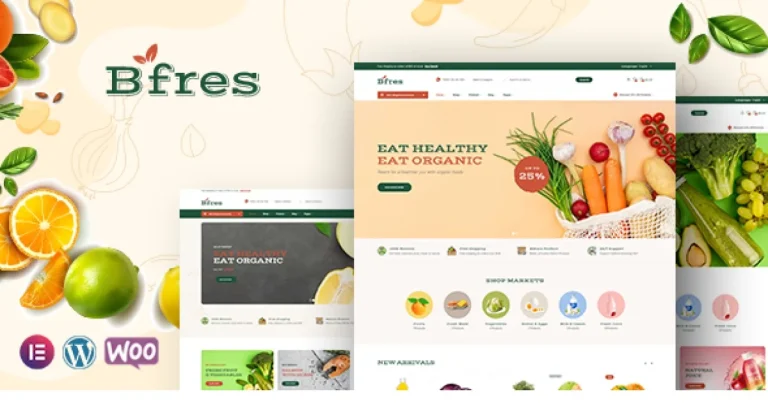
Scenario one: a farm shop that sells produce online. The developer imports the organic food home layout, deploys the catalog, single product, and cart/checkout flows that ship as maintained WooCommerce templates, and when the catalog needs department-level merchandising for grocery-style categories, pairing the build with Bfres Organic Food WooCommerce Theme offers an alternate storefront codebase to compare against for multi-department product presentation.
Scenario two: a dairy or livestock producer needing a multilingual brochure-plus-shop site. WPML integration and textdomains loaded at init let translators localize every string, while the livestock or farming home layouts are selected instead of the shop-first one.
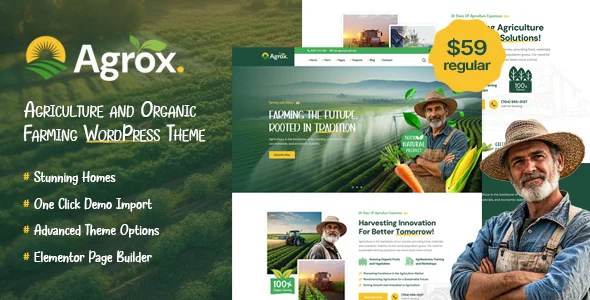
Scenario three: an agency with several agribusiness accounts. Each client site receives the bundled child theme, and teams can swap design direction between sibling products like Agrox without changing their Elementor workflow, keeping component knowledge reusable across projects.
Frequently Asked Questions
Does the theme include a child theme for custom PHP modifications?
Yes. A basic child theme ships with the package, so developers can enqueue overrides and patch template files independently of the parent codebase, preserving modifications when the parent theme receives its version updates.
Do sliders handle right-to-left locales without manual configuration?
Yes. Since v1.0.8, hardcoded RTL slider settings were removed, and sliders inside Elementor widgets detect the document direction and switch to RTL mode automatically, including Image Carousel navigation and pagination.
Can updates be applied without re-downloading the full package?
Yes. The codebase supports automatic version delivery through the Envato Market plugin, so administrators can pull theme and bundled plugin updates from the WordPress dashboard instead of manual file replacement.